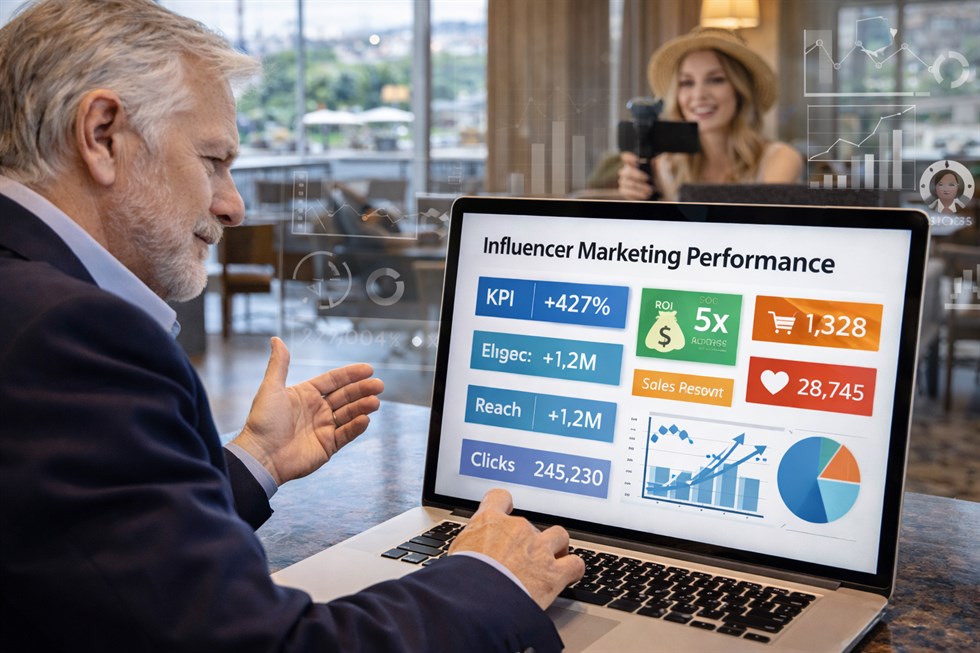
Influencer marketing is no longer just about visibility, likes, or viral reach. For businesses, it has become a real performance channel that competes with paid ads, SEO, and partnerships for budget and attention. The key question is no longer “Did people see the content?” but “Did this collaboration bring measurable business results?”
This is where influencer marketing ROI comes in. Without clear metrics and structured evaluation, brands risk spending money on campaigns that look successful on the surface but fail to drive revenue, leads, or long-term growth. In this guide, we break down which KPIs actually matter, how to calculate ROI correctly, and how to turn influencer campaigns into predictable, scalable business tools.
Why Measuring Influencer Marketing ROI Is Critical for Business
Influencer marketing ROI is one of the most important metrics for businesses investing in creator collaborations. Without clear measurement, influencer campaigns quickly turn into “nice content” that looks good in reports but doesn’t reliably drive growth.
For business teams, ROI measurement answers the only questions that matter:
- Did the campaign create real business impact?
- Which creators performed best for our goal?
- What should we change next time to improve results?
When you track ROI consistently, influencer marketing becomes a controllable channel. You stop guessing and start scaling what works.
Important: If you don’t measure ROI, you can’t optimize influencer campaigns.
Core KPIs for Influencer Marketing Performance
To measure influencer marketing ROI correctly, businesses track a combination of visibility, engagement, and revenue metrics. The mistake most brands make is looking at a single KPI (likes or views) and calling it “performance.” In reality, each KPI explains only one part of the funnel.
Use this KPI stack to evaluate campaigns in a way that connects content to outcomes:
| KPI | What It Measures | Best Use Case |
|---|---|---|
| Reach | Unique audience size | Brand awareness |
| Engagement Rate | Audience interaction | Content quality |
| CTR | Link clicks | Traffic generation |
| CPA | Cost per action | Lead or sales campaigns |
| ROI | Profitability | Business evaluation |
Below is how to use these KPIs in practice (without turning your campaign into a spreadsheet nightmare).
Reach: Awareness That Actually Reaches People
Reach tells you how many unique people saw the content. It’s a top-of-funnel KPI and works best for launches, repositioning, and brand awareness pushes.
- Use reach when: your goal is visibility (new product, new city, new offer, new brand).
- Don’t use reach alone when: your goal is leads or sales.
If you run multiple creators, compare reach against cost to understand your cost per reached person (even if you don’t calculate it as a formal KPI).
Engagement Rate: A Quality Filter
Engagement rate (likes, comments, saves, shares relative to views or followers) is a quick signal of content relevance. It’s most useful for understanding whether the creator’s audience reacted strongly to your message.
- High engagement often means the creator hit the right angle, tone, or offer.
- Low engagement can mean weak creative, wrong audience, or a poor fit between creator and product.
Pro tip: treat saves and shares as stronger signals than likes. They typically indicate real interest and intent.
CTR: Proof That People Wanted More
CTR (click-through rate) shows how many people moved from the content to your site, menu, booking page, form, or product page. It’s the KPI that bridges awareness to action.
- Use CTR when: you’re driving traffic (landing pages, blog posts, sign-up forms, product pages).
- Improve CTR by: using strong CTAs, clear offers, and frictionless links (one link, one action).
If the creator platform supports it, track unique clicks and UTM-tagged links so you can attribute traffic correctly.
CPA: The KPI Businesses Can Scale
CPA (cost per action) is where influencer marketing becomes comparable to other acquisition channels. “Action” depends on your goal:
- Lead submitted
- Reservation made
- App install
- Purchase completed
- WhatsApp/DM inquiry (if you define and track it)
CPA is the KPI that helps you decide whether to scale a creator partnership. If one influencer produces consistent low CPA, they are not a “nice-to-have.” They are a growth asset.
ROI: The Bottom Line
ROI is the final profitability test. It doesn’t replace other KPIs, but it sits above them. You can have amazing reach and engagement and still lose money. ROI tells the truth.
How to Calculate Influencer Marketing ROI
Influencer marketing ROI shows whether your campaign generated more revenue than it cost. The basic formula is simple:
ROI (%) = (Revenue − Cost) / Cost × 100
However, the “cost” part is where many brands quietly break the math. Cost should include everything you spent to make the campaign happen:
- Creator fee (or the market value of the barter product/service)
- Production costs (shooting, editing, design) if paid separately
- Shipping/fulfillment costs for product seeding (if relevant)
- Discounts you gave to customers via promo codes (optional but useful)
Revenue should reflect what you can reasonably attribute to the campaign:
- Tracked sales from UTM links
- Sales via promo codes
- Booked services (appointments, hotel nights, reservations)
- Qualified leads (if you use lead value)
Example: Campaign cost: $1,000. Revenue generated: $3,000. ROI = (3,000 − 1,000) / 1,000 × 100% = 200%.
How to Measure ROI When Sales Are Not Instant
Not every business has instant checkout. If your sales cycle is longer (beauty services, real estate, clinics, education, B2B services), ROI measurement still works—you just need a consistent attribution rule:
- Track leads and define what a “qualified lead” is.
- Assign a realistic value per qualified lead (based on historical conversion).
- Measure ROI using lead value, then update once actual sales close.
Consistency matters more than perfection. The goal is comparable data across campaigns.
Common Mistakes When Measuring Influencer Campaigns
Many brands repeat the same mistakes when evaluating influencer marketing performance. Learn more in common influencer marketing mistakes.
Mistake 1: Choosing KPIs That Don’t Match the Goal
If the goal is sales, impressions and likes are not the finish line. If the goal is awareness, CPA might be misleading. Start with one campaign goal, then select KPIs that prove it.
Mistake 2: No Tracking Infrastructure
ROI becomes guesswork when you don’t use UTMs, promo codes, dedicated landing pages, or CRM tags. One clean tracking method is better than none.
Mistake 3: Comparing Influencers Without Normalizing
Comparing raw likes is pointless. Compare creators by the same goal-driven KPIs (CTR, CPA, attributed revenue) and include cost. A smaller creator with lower reach can still win on ROI.
Mistake 4: Stopping Measurement Too Early
Some conversions happen days after exposure. If you evaluate too soon, you undercount the real impact and pick the wrong winners.
Micro-Influencers and Higher ROI
Smaller creators often deliver higher influencer marketing ROI due to stronger audience trust. Their communities are tighter, comments are more authentic, and recommendations can feel like advice from a friend, not an ad.
Micro-influencers can be especially powerful when:
- You have a local business (restaurants, clinics, hotels, services)
- You need credibility more than pure reach
- You want a cost-effective way to test multiple creatives and angles
Read more: when micro-influencers outperform big accounts.
Market-Specific ROI: Influencer Marketing in Turkey
Influencer marketing ROI varies by region. Turkey has unique dynamics explained in how influencer marketing works in Turkey.
What Changes ROI in Turkey
- Platform mix: Reels and Stories can outperform static posts depending on niche.
- Audience behavior: DMs and WhatsApp inquiries may be more common than link clicks in some sectors.
- City-driven demand: Local creators can produce higher conversion for local services than national accounts.
The key is to define what “conversion” looks like in your market and then track it consistently.
Key Takeaways
- Influencer marketing ROI must be data-driven
- One KPI is never enough
- ROI matters more than likes
- Micro-influencers often outperform macro creators
How to use this checklist: Pick one campaign goal (awareness, traffic, leads, or sales). Track the matching KPIs from this article for every creator. After the campaign, compare creators only by those goal KPIs (plus cost). Then repeat the same measurement approach in your next campaign to see real improvement over time.
Frequently Asked Questions (FAQ)
What is the best KPI for influencer marketing ROI?
ROI combined with CPA provides the clearest picture because it shows profitability and efficiency, not just attention.
Can ROI be measured without links?
Yes, using promo codes, surveys (“How did you hear about us?”), tracked DMs, and direct sales tracking in your CRM.
How long should campaigns be measured?
At least 7–14 days after publication to capture delayed conversions, with longer windows for high-consideration products.
Are impressions more important than sales?
No, impressions show visibility, not profitability. They can support awareness goals, but sales and CPA determine business outcomes.
Does barter collaboration have ROI?
Yes. Calculate campaign cost based on the market value of the product or service you provided (not your internal cost).
Should brands compare influencers?
Yes, using the same KPIs, the same goal, and the same attribution window. Without consistent comparison rules, results will be misleading.