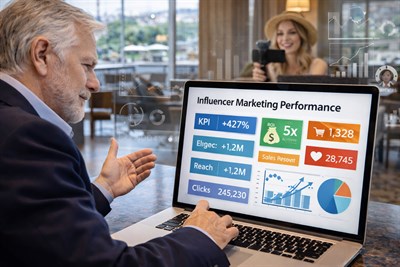
An influencer marketing budget is not “how much you can afford this month.” It’s a controlled plan for how you will buy attention, convert it into measurable actions, and learn fast without overspending. If your first instinct is to pick a number and start paying creators, you’re already at risk: the most common mistake is overspending without ROI because the campaign has no measurable KPI, no cost model, and no allocation logic. A strong influencer marketing budget starts with a simple sequence: define the outcome, define how you will measure it, forecast realistic costs, allocate spending by stage (testing → scaling), and control risk through milestones and diversification.
This guide gives businesses a complete framework: cost components, typical ranges, allocation models, ROI planning formulas, and practical examples you can apply even if you’ve never run an influencer campaign before.
What Is an Influencer Marketing Budget?
An influencer marketing budget is a structured spending plan that covers all campaign costs—not only “creator fees”—and ties each cost to a business outcome and measurement method. In practice, an influencer budget is the sum of (1) what you pay creators (cash or value), (2) what it costs to produce content and manage the campaign, and (3) what it costs to distribute, track, and optimize performance.
Businesses underestimate budgets when they treat influencer marketing like a single purchase (“one post = one payment”). But influencer work is closer to a small media program: you’re buying a mix of content assets, placement, usage rights, distribution (sometimes paid amplification), and learning (analytics and iteration). A real influencer campaign budget is built to answer three questions: What are we buying? (deliverables + rights), what will it do? (KPI + funnel stage), and how do we control risk? (milestones, tests, backups).
Core Cost Components of an Influencer Marketing Budget
A professional influencer marketing cost plan includes more than the creator’s invoice. The table below shows the typical cost categories, a realistic allocation range, and the risk level if that part of the budget is ignored or mismanaged.
| Cost Category | Description | Typical % of Budget | Risk Level |
|---|---|---|---|
| Creator fees | Payments for posts, stories, reels, YouTube integrations, livestreams, or multi-post packages; may include usage rights or add-ons. | 40–70% | High (overspend, poor fit, weak conversion) |
| Production | Product samples, shipping, set/props, editing support, brand assets, landing pages, discount code setup, photography/video support. | 5–20% | Medium (quality issues, slow approvals, missed timelines) |
| Management | Internal time, agency fees, influencer platform fees, outreach, negotiation, contracting, approvals, coordination. | 10–25% | High (delays, miscommunication, compliance issues) |
| Paid amplification | Boosting influencer content as ads, whitelisting/spark ads, retargeting, paid social distribution, or creator content repurposed for performance. | 0–30% | Medium–High (wasted spend if tracking/creative is weak) |
| Analytics tools | Tracking links (UTM), attribution tools, affiliate software, dashboarding, social listening, fraud detection, or influencer CRM. | 2–10% | High (can’t measure ROI, can’t learn or scale) |
The exact mix depends on your goal. Brand awareness programs often spend more on creators and production; performance programs often allocate more to tracking and paid amplification. The mistake is assuming “creator fees = budget” and discovering later that shipping, content edits, paid usage rights, or internal management time blow up the plan.
How Much Does Influencer Marketing Cost?
When businesses ask how much does influencer marketing cost, they usually mean “How much cash should we set aside for creators?” But a useful answer must include the whole campaign system: deliverables, rights, management, production, and measurement.
If you want a detailed breakdown of typical rates, package structures, and what changes the price, read how much influencer marketing really costs. That pricing guide helps you estimate cost per influencer post across platforms, audience sizes, and deliverable types.
Typical cost ranges (practical budgeting lens)
The ranges below are intentionally broad because pricing varies by niche, geography, creator quality, seasonality, usage rights, and whether the deliverable is integrated content (e.g., YouTube mid-roll mention) versus a standalone post. Use this as a starting point, then calibrate with your niche benchmarks and your own test results.
| Creator Tier | Typical Audience | Common Use Case | Typical Package Range (USD) | Notes |
|---|---|---|---|---|
| Micro | 5K–50K | Testing, local campaigns, niche trust | $100–$1,500 | Often strongest engagement-to-cost; best for learning fast. |
| Mid-tier | 50K–250K | Scaling winners, balanced reach + trust | $1,000–$10,000 | Rates vary widely by niche and content quality. |
| Macro | 250K–1M | Brand lift + credibility + reach | $8,000–$50,000+ | Often requires stronger creative direction and rights planning. |
| Celebrity | 1M+ | Mass awareness, PR moments | $25,000–$250,000+ | High variance; ROI depends heavily on offer and amplification strategy. |
Remember: these ranges do not include everything. Add management time, content usage rights, shipping/samples, and tracking. If you plan a $10,000 creator spend but ignore 15–25% management and 5–15% production, you’ve built a fragile budget.
Variables that change cost the most
- Deliverable type: a story mention, a reel, a carousel, a YouTube integration, or a multi-platform bundle all price differently.
- Usage rights: paid usage (ads/whitelisting) and long-term licensing can add significant cost, but can also improve ROI.
- Exclusivity: preventing a creator from working with competitors usually increases price and should be justified by expected value.
- Creative workload: heavy scripting, multiple edits, or on-location production increases cost and timelines.
- Niche sensitivity: finance, health, legal, or regulated categories often require more compliance and stronger creator vetting.
Budget Allocation Models
A good influencer campaign budget is not just “how much,” but “how you distribute spending over time and across creators.” Allocation models prevent two classic failures: (1) spending everything on one big creator without learning, and (2) spreading budget across too many creators without enough spend to see signal. Below are four allocation models businesses use to control risk and improve learning.
1) Testing model (70/20/10)
This model is designed for businesses that want stability and learning. It allocates most spend to proven creators and formats, reserves budget for optimizing winners, and keeps a small slice for experiments.
- 70% to proven creators/formats that have produced results (or the closest available benchmark).
- 20% to optimization: variations of the winners (new hooks, different offer, different landing page).
- 10% to experiments: new platforms, new creator tiers, fresh concepts.
Example: You have $20,000. Spend $14,000 on your best-performing format (e.g., 10 micro creators + 2 mid-tier), $4,000 on variations (different angle, new CTA), and $2,000 testing a new platform or a new niche creator group.
2) Performance-driven allocation
This model treats influencer spend like performance media: invest in creators or content that meets thresholds, reduce spend where it doesn’t. It works best when you have strong tracking and clear conversion KPIs (leads, purchases, trial starts).
- Start with test budgets across 8–20 creators.
- Define pass/fail thresholds (e.g., CPA under X, CTR over Y, conversion rate over Z).
- Scale only the creators/content that passes the threshold.
Example: You test 12 micro creators at $300 each ($3,600) plus $1,200 for tracking and management. Only 4 creators hit your CPA target. You allocate the next $8,000 to those 4 creators plus paid amplification of their best posts.
3) Hybrid model (brand + performance)
The hybrid model splits budget across brand-building content (reach, credibility, social proof) and performance content (direct response, offer-driven conversion). This is common for businesses that want both near-term sales and long-term brand lift.
- Brand slice: creators with high trust and audience fit; content aimed at awareness and consideration.
- Performance slice: creators with proven conversion; content includes specific offer, tracking, strong CTA.
- Shared assets: repurpose top brand content into paid ads when rights allow.
Example: $30,000 budget: $18,000 on brand creators + high-quality content, $9,000 on conversion creators + tracked offers, $3,000 on whitelisting and retargeting using the best-performing creator assets.
4) Long-term ambassador model
Instead of “one-off posts,” you allocate budget to recurring partnerships: monthly deliverables, consistent messaging, and compounding trust over time. This model can reduce acquisition costs and increase conversion because audiences see repeated exposure.
- Contract 3–10 creators for 3–6 months.
- Pay a predictable monthly fee (sometimes combined with performance incentives).
- Standardize deliverables (e.g., 1 reel + 3 stories per month) and rotate angles.
Example: You commit $5,000/month for 4 months to 5 micro ambassadors. Each month you test a new messaging angle, track sales via codes/UTM, and keep the top performers for the next quarter.
ROI Planning Before Spending
The fastest way to waste an influencer marketing budget is to plan spend without forecasting ROI. You don’t need perfect attribution to plan intelligently, but you do need measurable KPIs and a basic financial model. Start by defining what “success” means in numbers: revenue, leads, trials, sign-ups, store visits, or qualified conversations. Then connect those to realistic conversion assumptions and cost constraints.
Important: Never plan budget without measurable KPI.
Core ROI formula
Use the standard formula as your baseline:
ROI = (Revenue - Cost) / Cost
If ROI is positive, you generated more revenue than you spent. But ROI alone can hide problems (e.g., high revenue but also high cost). That’s why businesses also track CPA, CPM, and ROAS.
CPA, CPM, ROAS (what they mean for budgeting)
- CPA (Cost per Acquisition): total spend ÷ number of acquisitions (purchase, lead, sign-up). Use CPA to set pass/fail thresholds.
- CPM (Cost per 1,000 impressions): spend ÷ (impressions/1,000). Useful for awareness, but not enough for ROI.
- ROAS (Return on Ad Spend): revenue attributed to campaign ÷ campaign spend. Often used for paid amplification, but can be applied to tracked influencer spend.
Practical ROI forecasting workflow
- Define the conversion event: purchase, lead, trial, booking request, etc.
- Define gross margin: revenue is not profit; use margin to avoid fooling yourself.
- Set a target CPA: based on margin and acceptable payback period.
- Forecast conversions: using realistic ranges (best case, base case, worst case).
- Back-calculate allowable spend: allowable spend = expected conversions × target CPA.
Worked example (simple, business-friendly)
Assume you sell a product at $120 with a 50% gross margin ($60 gross profit per sale). You want a CPA of $30 to leave room for overhead and profit. If you expect 300 sales from a campaign, the maximum budget for that campaign should be:
Allowable spend = 300 × $30 = $9,000
If creators want $12,000 for the planned deliverables, you either (1) negotiate deliverables/rights, (2) improve conversion mechanics (offer, landing page, retargeting), or (3) adjust expectations and treat it as brand spend (with a different KPI).
Barter vs Paid Campaigns
Many businesses use barter because it feels cheaper: “We’ll give product or service instead of paying cash.” In reality, barter is not automatically cheaper—it simply shifts where the cost appears. To understand the trade-offs, read barter vs paid influencer campaigns.
Hidden costs of barter (what businesses forget)
- Cost of goods: the product you give away has real cost (COGS), not just retail price.
- Operational cost: shipping, handling, customer support, returns, scheduling, or reservations.
- Lower control: creators may treat barter as lower priority, leading to delays or weaker execution.
- Compliance and expectations: without clear contracts, barter deals often fail on deliverables and usage rights.
- Opportunity cost: inventory given away might have been sold at a discount to real customers.
When barter makes sense
- High-margin products or services where COGS is low relative to perceived value.
- Local experiences (hotels, restaurants, activities) where capacity would otherwise go unused.
- Early testing with micro creators where the goal is content volume and learning, not immediate ROI.
When paid is usually better
- When you need reliable delivery dates, revisions, and predictable quality.
- When you require usage rights for paid amplification.
- When performance metrics and accountability matter (CPA targets, conversion thresholds).
Risk Management & Budget Control
Budget planning is also risk planning. You are dealing with creative production, human schedules, and imperfect measurement. A well-designed influencer marketing budget includes controls that reduce the chance of overspending, under-delivering, or losing track of ROI.
1) Payment milestones
Avoid paying 100% upfront unless the creator is a long-term partner with proven reliability. Common milestone structures:
- 50/50: 50% on contract signing, 50% after posting and link verification.
- 40/40/20: 40% upfront, 40% on content approval, 20% after posting and reporting.
- Monthly retainers: for ambassadors, pay monthly after deliverables are completed.
2) Performance clauses (when appropriate)
Not every campaign should be “pay per sale,” but you can still include performance mechanics:
- Bonus for thresholds: extra fee if content exceeds a tracked KPI (e.g., link clicks, sign-ups).
- Make-good clause: if posting fails or major errors occur, creator provides an additional post/story.
- Content usage terms: define whether you can repurpose content for ads, and at what cost.
3) Test budgets before scaling
Even if you have a large budget, you still want a disciplined test phase. A test budget should answer: Does the audience fit? Does the offer convert? Does the creator deliver quality? Do tracking links work?
- Run a 2–4 week test with multiple creators.
- Measure the baseline metrics and identify winners.
- Scale only after you have repeatable signal.
4) Diversification
Never bet the whole budget on one creator or one platform. Influencer performance is volatile: algorithm changes, audience fatigue, content quality variance, and creator schedule issues are normal. Diversification reduces the impact of any single failure.
- Diversify by creator tier (micro + mid-tier).
- Diversify by format (reels + stories + YouTube integrations).
- Diversify by funnel stage (awareness + conversion).
Tip: Always reserve 10–15% contingency budget.
5) Budget control checklist (operational)
- Define budget caps: maximum spend per creator, per week, per campaign phase.
- Standardize reporting: require screenshots/analytics exports and track UTM/codes in one sheet.
- Track total cost per creator: include add-ons like usage rights, shipping, and revisions.
- Review weekly: compare planned spend vs actual spend and adjust allocation.
- Document learnings: what worked, what failed, why, and what to test next.
Building your influencer campaign budget step-by-step
If you want a repeatable budgeting process (not a one-time estimate), use this operational sequence. It works for small businesses planning a $2,000 test and for teams managing six-figure programs.
Step 1: Define the goal and the KPI
Choose one primary KPI that matches your business goal:
- Awareness: reach, impressions, video views, brand search lift (where possible), share of voice.
- Consideration: profile visits, website sessions, email sign-ups, add-to-cart, time on page.
- Conversion: purchases, qualified leads, booked calls, trials started, reservations.
You can track multiple metrics, but your budget decisions should be driven by one primary KPI. Otherwise, teams chase vanity metrics and overspend without ROI.
Step 2: Choose the campaign type and deliverables
Your deliverables define your costs. A reel is not interchangeable with a story. Define deliverables in clear units:
- Platform: Instagram, TikTok, YouTube, etc.
- Format: reel, story set, carousel, integration, livestream.
- Quantity: number of assets, number of posts, number of story frames.
- Timeline: posting date windows and revision deadlines.
- Rights: organic only vs paid usage (whitelisting/spark ads).
Step 3: Forecast cost per creator (and total creator spend)
Estimate influencer marketing pricing using your niche benchmarks and the deliverable list. Then add allowances for negotiation and add-ons. Businesses should also set “walk-away” caps:
- Max cost per creator (based on expected value).
- Max cost per deliverable type.
- Max total creator spend for the test phase.
Step 4: Add non-creator costs
This is where most budgets fail in real life. Add:
- Product/samples/shipping or service delivery costs
- Creative and editing support (if needed)
- Landing page creation and tracking setup
- Management time (internal or agency/platform)
- Analytics tooling and reporting
- Paid amplification budget (if used)
- Contingency reserve (10–15%)
Step 5: Pick an allocation model
Choose one of the allocation models above based on your maturity:
- If you’re new: start with Testing (70/20/10) or Performance-driven.
- If you have data: use Hybrid or Long-term ambassador.
Step 6: Build a tracking and reporting system
Budget control depends on measurement. At minimum:
- UTM links per creator and per deliverable
- Unique discount codes (if applicable)
- Landing pages mapped to campaign goals
- A single reporting sheet with planned vs actual spend and results
Step 7: Run a test, then scale
A disciplined influencer marketing budget treats early spend as learning, not guaranteed profit. Run tests, identify patterns, and then increase spend where results repeat. Scaling without a test phase is the fastest route to overspending without ROI.
Common budgeting mistakes (and how to avoid them)
- Buying followers instead of fit: audience match and content quality matter more than big numbers.
- No definition of “done”: unclear deliverables create scope creep and surprise costs.
- Ignoring rights: paid usage rights can make content more valuable—but must be planned and priced.
- Too few creators in testing: you need enough tests to see signal; one creator is not a test.
- Spending without measurement: if you can’t measure, you can’t manage the budget.
- No contingency reserve: delays, re-shoots, and platform shifts happen; reserves keep you stable.
Budget planning templates (copy-and-use logic)
Below are two practical templates. You can adapt them to your business size and maturity.
Template A: Small business test budget (example)
| Line Item | Quantity | Unit Cost | Total | Notes |
|---|---|---|---|---|
| Micro creators (reel + story set) | 8 | $250 | $2,000 | Focus on niche fit and consistent CTA |
| Shipping/samples | 8 | $25 | $200 | Include packaging and returns allowance |
| Management time/tools | 1 | $400 | $400 | Outreach, contracts, approvals, tracking setup |
| Tracking & reporting | 1 | $150 | $150 | UTM links, code setup, dashboard sheet |
| Contingency (10%) | 1 | $275 | $275 | Covers replacements or extra edits |
| Total | $3,025 | Test phase budget with measurement | ||
Template B: Growth-stage hybrid budget (example)
| Line Item | Allocation | Monthly Spend | Goal | Control Mechanism |
|---|---|---|---|---|
| Brand creators (mid-tier) | 40% | $12,000 | Reach + credibility | Deliverable checklist + content approvals |
| Performance creators (micro/mid) | 35% | $10,500 | Tracked conversions | CPA thresholds + scaling only winners |
| Paid amplification (whitelisting/retargeting) | 15% | $4,500 | Scale best assets | ROAS monitoring + creative rotation |
| Analytics & management | 10% | $3,000 | Measurement + operations | Weekly reporting, fraud checks, spend caps |
| Total | 100% | $30,000 | Balanced program | Budget review weekly |
Key Takeaways
- Plan your influencer marketing budget as a system: creator fees + production + management + tracking + (optional) paid amplification.
- Never spend without measurable KPI; define pass/fail thresholds before launch.
- Use allocation models (70/20/10, performance-driven, hybrid, ambassador) to reduce risk and improve learning.
- Forecast ROI using ROI, CPA, and ROAS; back-calculate allowable spend from margin and conversion expectations.
- Barter is not automatically cheaper—count COGS, operations, and opportunity cost.
- Control risk with milestones, test budgets, diversification, and a 10–15% contingency reserve.
Frequently Asked Questions (FAQ)
What is a realistic influencer marketing budget?
A realistic budget is one that matches your goal and measurement maturity. For small businesses, a structured test budget often starts in the low thousands, because you need enough creators to see signal and enough tracking to learn. For growth programs, budgets scale based on allowable CPA and repeatable performance. The key is not the absolute number—it’s whether you included creator fees, management, production, tracking, and a contingency reserve.
Is $5,000 enough?
$5,000 can be enough for a disciplined test phase, especially with micro-influencers, a clear offer, and tracking (UTM + codes). It becomes insufficient if you try to buy “big reach” with one creator and skip measurement. Use $5,000 to test multiple creators, learn what converts, and then decide whether to scale.
How to calculate influencer ROI?
Use ROI = (Revenue - Cost) / Cost. For budgeting, also track CPA (cost per acquisition) and ROAS (revenue ÷ spend). If you can’t attribute revenue directly, use leading indicators (qualified leads, trials, bookings) and connect them to historical conversion rates. The goal is to make budget decisions based on measurable outcomes, not vanity metrics.
Should small businesses use micro-influencers?
Often yes. Micro-influencers can offer better audience fit and engagement relative to cost, making them ideal for testing. They also allow diversification—running 8–20 tests instead of betting on one big creator. The requirement is good briefing, clear deliverables, and consistent tracking.
Is barter cheaper?
Not automatically. Barter can reduce cash spend, but you still pay through COGS, shipping, operations, and opportunity cost. Barter also sometimes reduces control over timelines and revisions. It can be effective for high-margin products and local experiences, but it should be budgeted like a real cost—not treated as “free.”
How much should be allocated for testing?
Many businesses allocate 10–30% of their influencer campaign budget to testing, depending on maturity. If you are new, lean higher so you can learn quickly without committing the full budget. A common approach is a structured 70/20/10 model, where 10% is dedicated to experiments and 20% to optimization, while the majority goes to proven winners.