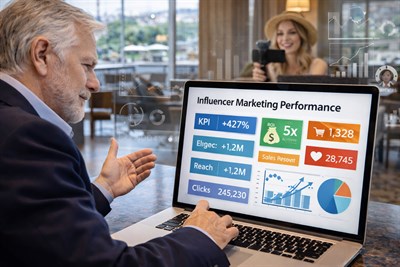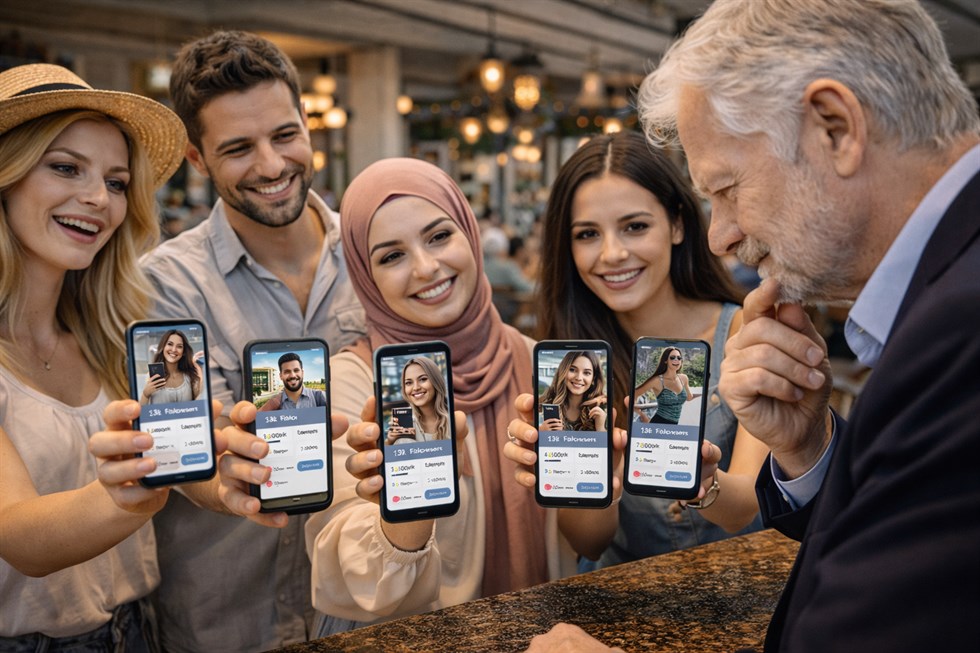
To choose an influencer for business that actually drives customers, start with one rule: pick for buyer-fit, not fame. The right creator is the one whose audience matches your ideal customer, whose content style supports your offer, and whose past integrations show real intent (clicks, inquiries, bookings, purchases)—not just likes. In practice, that means you first define ROI goals (leads, sales, CAC), then shortlist creators by audience relevance, verify audience quality (real people, real location, real interests), and only then compare performance metrics (saves, replies, link clicks, conversion signals). If you do these steps in order, you stop “buying reach” and start buying predictable demand.
High reach does not guarantee sales. Audience relevance is the key business metric.
Why Most Businesses Choose Influencers Incorrectly
When businesses search “how to choose influencer for business,” they often copy consumer-brand logic: pick the biggest account, hope for virality, and then blame “the audience” when sales don’t move. The real problem is the selection criteria.
- They choose by follower count. Followers are the easiest number to see, so it becomes the decision—even when the audience is the wrong country, wrong language, or wrong income level.
- They optimize for views, not outcomes. Views can be entertainment. Sales require trust + relevance + a clear path to action.
- They skip the offer-fit check. A creator can be great—and still terrible for your product if their audience doesn’t buy what you sell.
- They don’t define the “win.” If you can’t answer “what is success?” (leads, bookings, carts, store visits), you can’t choose correctly or evaluate fairly.
Businesses win with influencer marketing when they treat it like performance: define a target buyer, define a measurable action, and choose creators who can repeatedly trigger that action.
What Makes an Influencer Effective for Business
To choose the right influencer for your business, you’re not hiring a celebrity—you’re renting attention + trust inside a specific audience. The effective creator has three things that correlate with ROI.
- Audience-buyer fit: Their followers resemble your customers (location, language, budget, needs, lifestyle).
- Trust behavior: The audience asks questions, requests links, replies to stories, saves content, and follows recommendations.
- Conversion pathway: The creator naturally integrates a call to action (DM, link, code, booking) without it feeling forced.
If you want leads and sales, the influencer’s “power” is not charisma. It’s the repeated ability to make their audience take the next step.
How to Evaluate Influencer Audience Quality
When you choose an influencer for business marketing, audience quality is your risk control. You’re checking whether the audience is real, relevant, and likely to act.
1) Relevance checks (the business basics)
- Location: For local businesses, the audience must be heavily concentrated in your city/region.
- Language: If your sales team and offer are in one language, the audience should consume content in that language.
- Customer profile: Look for signs of budget level and lifestyle match (travel frequency, dining habits, family status, interests).
2) Authenticity checks (real people vs inflated numbers)
- Comment quality: Real audiences leave specific comments and questions, not generic emoji spam.
- Story interaction: Healthy accounts get DMs, polls, replies, and link taps—not just passive likes.
- Follower growth pattern: Sudden spikes without viral content often indicate bought followers or giveaway-only growth.
3) “Buyer intent” checks (will they actually purchase?)
- Do followers ask “where to buy / how much / link?”
- Do followers save practical content? (guides, checklists, comparisons)
- Do followers follow through? (screenshots of results, reposts, “I tried it” replies)
If the audience looks real but isn’t buyer-relevant, performance will be weak even with high engagement.
Metrics That Matter More Than Follower Count
To choose the right influencer for your business, treat follower count as a reach ceiling, not a performance indicator. The metrics that predict ROI are the ones tied to attention depth and action.
- Engagement rate (contextual): Compare engagement to their own content history, not random benchmarks. Consistency matters more than peaks.
- Saves and shares: Saves = utility and intent. Shares = social proof and distribution.
- Story replies / DMs: Replies show trust and willingness to interact—often closer to purchase behavior than likes.
- Click behavior: Link clicks, profile visits, “tap to message,” code usage (when available).
- Past business results: Case studies, screenshots, and credible examples of inquiries/bookings/sales.
Ask for proof in a business-friendly way: “What did your last 3 integrations deliver?” If the only answer is “coverage” and “views,” you’re likely buying awareness, not customers.
Micro-Influencers vs Macro-Influencers
If you’re learning how to choose influencer for business, this is the strategic decision: buy one big wave or multiple targeted streams. For most businesses focused on ROI, micro-influencers can be the more reliable engine.
For local businesses, multiple micro-influencers often outperform one large creator.
When micro-influencers win
- Local services: restaurants, clinics, hotels, salons, gyms—where location match is everything.
- Niche offers: a smaller audience that strongly wants the thing is better than a huge audience that doesn’t care.
- Trust-heavy categories: where people need reassurance before purchasing.
When macro-influencers make sense
- National brand awareness: you’re building recognition across a large region.
- Broad products with simple conversion: easy-to-understand offers with low purchase friction.
- Big budget + retargeting: you plan to amplify content with paid ads and track conversions through a funnel.
A practical approach for business: start with micro tests to find what converts, then scale with bigger creators only after you know what message and format actually sells.
Ad Formats That Convert
To choose the right influencer for your business, you also need to choose the right format. Different formats create different levels of trust and action. The best-performing formats usually feel native and useful.
1) Story sequence (high intent, fast action)
- Best for: leads, bookings, event sign-ups, limited-time offers
- Why it converts: direct CTA (DM/link), immediate context, conversational trust
- What to request: 3–7 stories: problem → experience → proof → offer → CTA
2) Review/Reel with a clear “why you should care”
- Best for: products, experiences, destinations, services with visible outcomes
- Why it converts: demonstrates value quickly, builds credibility, reusable for ads
- What to request: honest pros/cons, pricing context, and a single simple next step
3) Long-form (deep trust, slower conversion)
- Best for: expensive offers, complex services, education-heavy categories
- Why it converts: handles objections, increases confidence, improves lead quality
- What to request: comparison, behind-the-scenes, “how it works,” FAQ inside content
Whatever format you choose, the conversion lever is the same: relevance + proof + a frictionless CTA.
Influencer Selection Framework: A Business Checklist
If you want a repeatable way to choose an influencer for business, use this framework as a decision filter. It forces ROI logic and prevents “pretty content” purchases.
- Define the outcome: leads, sales, bookings, store visits, app installs (pick one primary).
- Define the buyer: who buys, where they live, what they want, what stops them.
- Shortlist by relevance first: geography + language + audience profile.
- Verify audience quality: real engagement, normal growth, credible interaction.
- Check conversion signals: saves, shares, DMs, past integration results.
- Match the format to the funnel: stories for action, reels for proof, long-form for trust.
- Run a small test: 1–2 creators, one offer, one CTA, track results.
- Scale what works: repeat with similar creators and refine message/landing/DM script.
Good influencer marketing is not luck. It’s controlled experimentation with buyer-fit at the center.
Common Mistakes to Avoid When Choosing Influencers
When businesses learn how to choose influencer for business, these mistakes show up repeatedly—and they’re expensive because they look “reasonable” on paper.
- Buying the wrong audience: perfect content, wrong geography or purchasing power.
- Weak offer or unclear CTA: the influencer can’t compensate for confusion.
- Too many messages at once: one post should sell one idea and one next step.
- No tracking plan: if you can’t attribute results, you can’t improve.
- One-and-done thinking: consistent partnerships often outperform random single placements.
Internal Links
- When Micro-Influencers Convert Better
- Common Influencer Marketing Mistakes
- How Much Influencer Advertising Costs
FAQ
How do I choose an influencer for my business?
Define your business goal (leads/sales), shortlist creators by audience relevance, verify audience quality, then compare conversion signals like saves, DMs, clicks, and proven results.
Do follower numbers matter?
Follower count sets potential reach, but it does not predict sales. Engagement quality, audience match, and conversion signals matter more.
Are micro-influencers effective for business?
Yes. For local and niche markets, multiple micro-influencers often outperform one large creator because relevance and trust are higher.
How can I spot fake followers?
Look for generic comments, low story interaction, suspicious growth spikes, and engagement that doesn’t match the follower count. Ask for basic analytics screenshots and compare them with content history.
Which content formats convert best?
Story sequences with a clear CTA often convert best for leads and bookings. Authentic reviews (Reels/posts) convert well when they show proof, pricing context, and one simple next step.
Can businesses work without agencies?
Yes. Businesses can work directly with creators if they use a consistent selection framework, define success metrics, and run small tests before scaling.