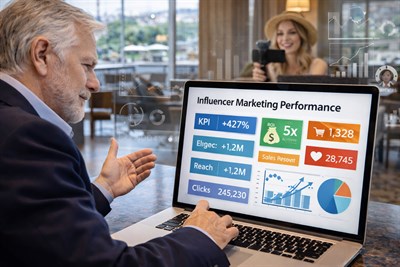
Excerpt: An in-depth look at why micro-influencers often deliver higher conversions and better ROI for businesses.
Micro influencer marketing has shifted from a “budget alternative” to a core performance strategy for many businesses. As brands move away from reach-only thinking and focus on measurable outcomes, small creators with highly relevant audiences increasingly outperform large influencers in conversion-driven campaigns. This article explains why that happens, where micro-influencers deliver the strongest ROI, and how businesses should approach micro influencer campaigns strategically.
What Micro-Influencers Are and Why Businesses Care
Micro influencer marketing typically refers to collaborations with creators who have relatively small but focused audiences. While exact definitions vary, micro-influencers usually operate in a range where they can still maintain direct interaction, audience familiarity, and contextual relevance. Unlike macro or celebrity influencers, micro-influencers are not media outlets — they are trusted voices inside specific niches.
For businesses, this distinction matters. Large creators often optimize content for reach and algorithmic distribution. Micro-influencers optimize for relationship and relevance. As a result, their audiences are more likely to listen, ask questions, and act on recommendations. This makes micro influencer marketing particularly effective for brands that care about conversions rather than impressions.
Audience relevance matters more than audience size in micro influencer marketing.
Conclusion & advice: Businesses should stop defining micro-influencers by follower count alone and start evaluating them by audience alignment and decision-making influence.
Why Small Accounts Often Convert Better
Small accounts tend to convert better because influence is built on trust, not scale. Micro-influencers usually have higher-quality conversations with their followers: comment sections are active, questions are answered, and recommendations feel personal rather than transactional.
Another factor is repetition. Micro-influencers often appear repeatedly in the same audience’s feed over time, reinforcing brand recall. This creates multiple touchpoints instead of a single high-reach spike. In addition, smaller creators are less likely to promote competing products simultaneously, which reduces message dilution.
Conclusion & advice: Conversion improves when recommendations feel authentic, contextual, and repeated — conditions that micro-influencers naturally create.
Micro-Influencers vs Big Influencers: Business Comparison
From a business perspective, the difference between micro and large influencers is not just reach — it is predictability. Large creators can deliver awareness quickly, but results are volatile. Micro-influencers offer smaller reach per post, but outcomes are more consistent and easier to optimize over time.
- Cost: Micro-influencers require lower upfront investment and allow budget diversification.
- Engagement: Interaction rates are typically higher and more meaningful.
- Predictability: Performance varies less across campaigns.
Influencer marketplace vs direct outreach
5–15 micro-influencers often outperform one large creator for the same budget.
Conclusion & advice: When ROI matters more than visibility, distributing budget across micro-influencers usually delivers stronger results.
When Micro-Influencers Work Best for Business
Micro-influencers are particularly effective for businesses that depend on relevance, proximity, or trust-based decisions. Service businesses, restaurants, hotels, and niche products benefit from creators who speak directly to their target audience rather than broadcasting broadly.
They also perform well in scenarios where repeated exposure matters: local discovery, consideration-driven purchases, and experiential services. In these cases, micro influencer campaigns create familiarity rather than short-term hype.
Influencer marketing for restaurants
Conclusion & advice: If your business relies on trust and real-world action, micro-influencers should be the default starting point.
Common Business Mistakes When Working With Micro-Influencers
Despite their advantages, micro-influencers are often misused. Businesses sometimes treat them like cheaper versions of large creators, applying the same expectations and structures. This leads to inconsistent results and frustration on both sides.
Common mistakes include poor briefing, one-off collaborations with no follow-up, and lack of performance tracking. Another frequent error is over-controlling creative output, which undermines authenticity.
Conclusion & advice: Micro-influencers perform best when treated as long-term partners with clear goals and creative autonomy.
Key Takeaways
- Micro influencer marketing focuses on relevance, trust, and conversion
- Small accounts often outperform large ones on ROI
- Distributed campaigns reduce risk and improve predictability
- Systems and repetition matter more than reach
FAQ
What is a micro-influencer?
Creators with small but highly engaged audiences focused on specific niches.
Why do micro-influencers convert better?
Because their recommendations are more trusted and contextually relevant.
Are micro-influencers cheaper?
Often yes, but the key advantage is value and ROI, not just price.
Do micro-influencers work for B2B?
Yes, especially in niche industries with expert-driven audiences.
How many micro-influencers should a business use?
Typically 5–15 per campaign to balance reach and consistency.
Can micro-influencers scale?
Yes, through structured systems and repeat collaborations.