A practical guide for restaurants in Turkey on influencer marketing that actually drives visits — not just likes.
Why Most Restaurant Influencer Campaigns Fail
Restaurant influencer marketing often fails because it is measured incorrectly. Many campaigns optimize for visibility metrics that have little connection to real customer behavior.
- Likes do not equal foot traffic. Engagement often comes from users who will never visit the restaurant.
- Wrong influencer metrics. Follower count is prioritized over local reach and visit intent.
- No local relevance. Influencers with national or global audiences rarely convert for local venues.
- No conversion logic. Posts lack a reason to visit now.
Restaurant influencer marketing fails when it is treated as branding only. For local venues, marketing must support physical visits.
What “Working” Influencer Marketing Means for Restaurants
For restaurants, influencer marketing works only when it impacts offline behavior.
Meaningful results include:
- Increased walk-ins after publication
- Table reservations mentioning the influencer
- Brand recall within the local neighborhood
- Repeat visits from first-time guests
If a campaign cannot be linked to visits, inquiries, or repeat guests, it is not working — regardless of reach.
Types of Influencers That Actually Work for Restaurants
Successful restaurant influencer marketing in Turkey is built on proximity and relevance.
Local food bloggers
Creators who regularly review cafés and restaurants in the same city or district bring the highest visit intent.
Micro-influencers (5k–50k followers)
Smaller creators often have stronger trust and higher local concentration.
Neighborhood creators
Accounts focused on a specific area, street, or district frequently outperform larger food influencers.
Why celebrities rarely work
Celebrity reach is broad but rarely local. For restaurants, this usually results in attention without action.
Which influencers actually drive sales in Turkey
Formats That Drive Restaurant Traffic
Not all content formats influence dining decisions equally.
- Stories: Drive immediate visits, especially with geotags and time-sensitive offers.
- Reels: Strong for discovery when focused on menu experience and atmosphere.
- Posts: Support brand recall but rarely trigger same-day visits.
Formats that consistently perform best:
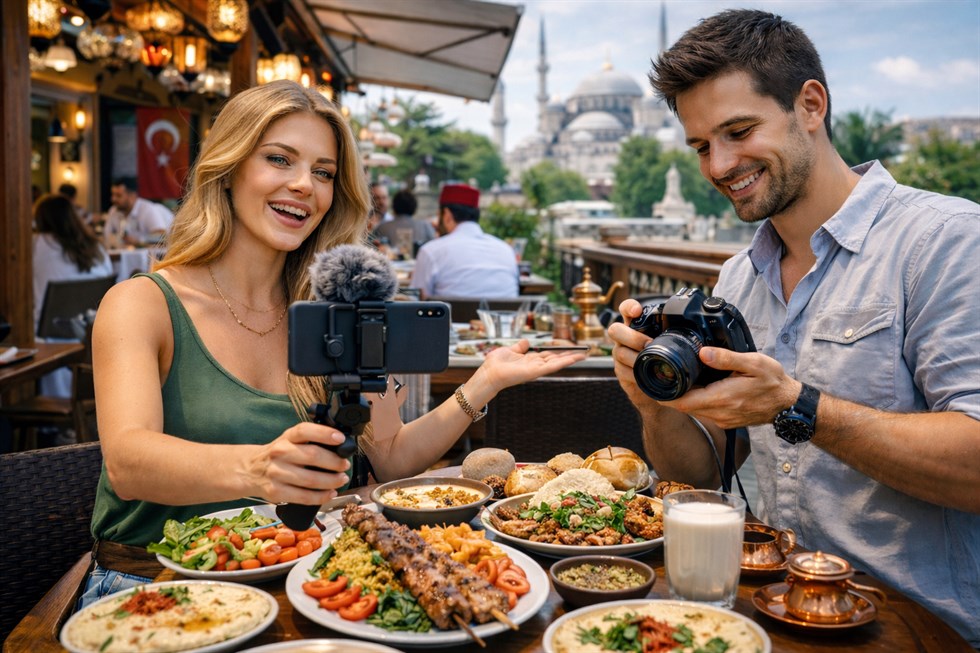
- Menu tasting and dish-focused videos
- “First visit” or “hidden spot” formats
- Limited-time offers or seasonal menus
How to Structure a Restaurant Influencer Campaign
Structure determines whether attention converts into visits.
Brief essentials
- Target audience and neighborhood
- Main dishes or experiences to highlight
- Clear call-to-action
Timing and posting windows
Publications should align with peak dining hours or upcoming weekends.
Offline attribution basics
Use simple signals: verbal mentions, table questions, promo phrases, or specific menu items tied to the campaign.
Budgets, Barter, and ROI Reality
Restaurant influencer marketing budgets in Turkey vary widely depending on location, creator type, and format.
When barter works
- Local micro-influencers
- New menu testing
- Low-risk visibility campaigns
When paid posts are required
- High-demand venues
- Creators with proven visit impact
- Campaigns tied to reservations
Most restaurants see better ROI when expectations, deliverables, and visit logic are defined upfront.
Influencer advertising in Turkey: barter or paid collaboration
Common Restaurant Mistakes
- Choosing influencers based on aesthetics only
- No call-to-action in content
- One-off collaborations with no follow-up
- No internal tracking of results
One influencer post rarely changes restaurant performance. Systems and repetition do.
What Will Work Better in 2026 for Restaurants
Restaurant influencer marketing is becoming more systematic and less transactional.
- Long-term collaboration with local creators
- Licensing UGC for ads and menus
- Creator-driven menu items and themed events
Key Takeaways
- Restaurant influencer marketing is local-first
- Micro-creators outperform large accounts
- Foot traffic matters more than engagement
- Systems beat one-off posts
FAQ
Does influencer marketing work for restaurants in Turkey?
Yes, when it focuses on local audiences and visit-driven formats rather than reach alone.
What type of influencer is best for restaurants?
Local food bloggers and neighborhood creators with a relevant audience.
Is barter enough for restaurant influencer marketing?
Barter works for some micro-creators, but paid collaborations are often required for consistent results.
How can restaurants measure influencer marketing results?
Through walk-ins, reservations, customer mentions, and repeat visits tied to campaign periods.