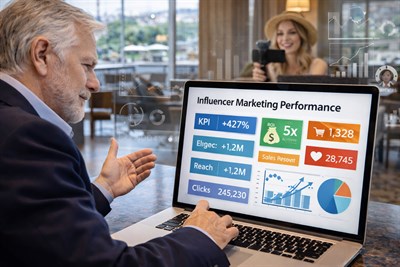
For local businesses in Turkey, barter vs paid influencer collaboration is not a “budget vs luxury” choice — it is a risk and control choice. Barter (free stay, meal, service) can work when the offer is genuinely valuable and the creator already reaches the exact local audience the business wants. Paid influencer marketing usually performs better when the business needs predictable reach, clear deliverables, and measurable outcomes (bookings, reservations, leads). The best model is the one that matches the business goal, seasonality, and the creator’s proven ability to drive action — not just views.
What Is Influencer Barter Collaboration
Influencer barter collaboration is a deal where the business provides value instead of money. In Turkey, this often looks like:
- Hotel: free nights, room upgrade, spa access, or half-board/all-inclusive.
- Restaurant: set menu, tasting experience, chef’s table, or event invitation.
- Services: beauty treatments, tours, clinics, car rentals, or activities.
The creator produces content (Reels, stories, posts, YouTube, blog) in exchange. The business “pays” with inventory and operational cost, which can be cheaper than cash — but only if the content leads to real demand.
What Is Paid Influencer Collaboration
Paid influencer collaboration means the business pays a fee for defined deliverables and distribution. This is usually what people mean by paid influencer marketing. Payment may cover:
- Content production (shooting, editing, script, voiceover).
- Distribution to an audience (views, reach, impressions).
- Usage rights (the business reusing content in ads, website, or social pages).
- Performance add-ons (tracking links, promo codes, reporting).
Paid campaigns are not automatically “better.” They are simply easier to control: clearer terms, fixed deadlines, and stronger accountability when the contract is written correctly.
Barter vs Paid — Key Differences
- Cost type: Barter uses inventory and staff time; paid uses cash.
- Control: Paid typically allows tighter control over deliverables and deadlines.
- Measurement: Paid more often includes tracking links, codes, and reporting.
- Risk: Barter risk is “content with no impact”; paid risk is “spend with weak ROI.”
- Creator motivation: Barter attracts creators who value the experience; paid attracts creators who run a predictable content business.
- Scale: Barter is harder to scale consistently; paid scales faster if budgets and systems exist.
Pricing is frequently where businesses get stuck. A useful next step is reviewing how rates are built and what actually affects the final quote: Influencer Pricing Guide.
When Barter Works Better for Businesses
Barter tends to work best when the business can offer something that is:
- High perceived value: a room with a view, a unique menu, a premium treatment, a scarce experience.
- Low marginal cost: empty rooms, off-peak tables, non-fully-booked time slots.
- Easy to deliver: minimal operational disruption, clear check-in/check-out rules, defined inclusions.
- Perfect audience match: the creator’s followers are already potential customers (local residents or the business’s core tourist segment).
💡 Practical takeaway: Barter works when the business is comfortable “spending” inventory in exchange for content that looks like an ad but feels like a real recommendation. If the business cannot clearly describe the target audience and what the content must achieve (reservations, bookings, leads), barter becomes a gamble.
Real example (hotel): A boutique hotel in Antalya offers 2 nights midweek in March (lower occupancy) to a creator who specializes in “weekend getaways in Turkey.” If the deal includes a booking code and the creator routinely drives bookings, barter can outperform a small paid post.
Real example (restaurant): A restaurant with a new menu uses barter with a micro creator who lives nearby and posts “where to eat in [district].” For local discovery, a strong micro creator can deliver higher intent than a bigger account with a mixed audience.
When Paid Influencer Campaigns Perform Better
Paid campaigns generally perform better when the business needs:
- Predictable output: specific number of videos, stories, edits, and publication dates.
- Speed: a campaign tied to a launch, event, or seasonal window.
- Multiple iterations: testing hooks, angles, and formats (especially for Reels/TikTok/Shorts).
- Rights for ads: using creator content in paid media or on the website for months.
- Clear measurement: UTMs, tracking links, promo codes, reservation screenshots, lead forms.
⚠️ Important: Paying does not buy sales. Paying buys deliverables and distribution. Sales require the full system: a compelling offer, correct audience targeting, easy booking flow, and a landing page or message script that converts.
Real example (service business): A clinic or beauty studio wants a consistent monthly flow of bookings. A paid collaboration with defined deliverables and a tracking code is typically more reliable than barter, because the business can plan volume, follow up leads, and compare results month over month.
For many local businesses, the sweet spot is mixing paid + micro creators with strong local relevance. A deeper guide is here: Micro-Influencers for Business.
Common Business Mistakes
- Choosing by follower count: ignoring geography, language, and audience intent.
- No deliverables list: “Make a post” without defining format, timing, tags, and talking points.
- No content angle: the creator improvises and the business gets a pretty video with no reason to book.
- No tracking: no promo code, no link, no message script, no way to attribute results.
- Overpaying for the wrong goal: paying premium rates for awareness when the business needs bookings.
- Barter with high operational cost: giving peak-season inventory away to creators who do not convert.
- Ignoring usage rights: assuming the business can reuse content for ads without permission.
- Weak conversion path: the audience wants to act, but the booking process is confusing or slow.
Choosing the Right Model for Local Markets
In Turkey’s local markets, results often depend on seasonality, language, and location intent. A practical decision framework:
- If the goal is discovery among locals: micro creators + clear “how to visit” details (district, parking, hours, price range) usually outperform broad accounts.
- If the goal is bookings: paid deals with tracking and deliverables are easier to optimize.
- If it is off-season or low occupancy: barter can be efficient, but only with creators who match the business segment.
- If the business needs consistent monthly flow: use paid influencer marketing with a repeatable plan and reporting.
- If the offer is unique and visual: barter can work, because the experience itself is “the content.”
A common hybrid that works well:
- Barter for experience-based creators who will film “what it feels like.”
- Paid for creators who can deliver predictable traffic with a code/link and a clear call-to-action.
- Optional add-on: purchase usage rights for the best-performing content and run it as an ad.
Key Takeaways
- Barter vs paid influencer collaboration is a choice between inventory cost and cash cost — and between low control and high control.
- Influencer barter collaboration works best when the offer is valuable, the audience match is precise, and seasonality makes inventory cheaper.
- Paid influencer marketing performs better when the business needs predictable deliverables, tracking, and measurable outcomes.
- Follower count is not a strategy. Audience location, language, and intent matter more.
- Every collaboration should include deliverables, timing, talking points, and a conversion path (code/link/script).
- Hybrid models often win: barter for authentic experience + paid for predictable performance.
FAQ
Is barter vs paid influencer collaboration better for small businesses?
It depends on the goal. Barter can be cost-efficient when inventory is underutilized and the creator matches the exact local audience. Paid is better when the business needs predictability, deadlines, and measurable results.
How do businesses pay influencers in Turkey?
Businesses typically pay a fixed fee per deliverable package (e.g., Reels + stories) or per campaign. Some deals include bonuses tied to performance, plus separate fees for content usage rights.
What is the biggest risk in influencer barter collaboration?
The biggest risk is receiving content that looks good but does not drive action. Without tracking links/codes and a clear conversion path, the business cannot judge ROI.
When does paid influencer marketing outperform barter?
Paid campaigns usually outperform barter when the business needs consistent lead flow, fast turnaround for a seasonal window, or strict deliverables with measurable reporting.
Are micro-influencers better for local markets in Turkey?
Often, yes. Micro creators can have stronger trust and local intent, especially for restaurants, services, and neighborhood-based businesses, as long as their audience is truly local and relevant.
What should a business include in an influencer collaboration agreement?
The agreement should include deliverables (formats and quantity), posting dates, key talking points, tagging requirements, tracking method (code/link), revision rules, and content usage rights.
Can a business mix influencer collaboration models in one campaign?
Yes. Many local businesses use barter for experience-based storytelling and paid collaborations for performance-driven posts with tracking and stronger accountability.